Job Hazard Analysis
Job Hazard Analysis
HazardAnalysisID: 28
Facility: Waukegan
Assessed By: Thurwanger / Brannaman
Original Assessment Date: 2025-07-24
Work Area: Field Service - PhotoVoltaic
Station: Field Service
Process: A photovoltaic drive in the field may have multiple power inputs, all supplied by the customer, and can be in difficult to reach areas. Prior to dispatching a Yaskawa Field Service Engineer, the customer must provide a one-line drawing to Yaskawa service department. The assigned engineer will review this document. The customer is responsible for locking power out to the Yaskawa drive prior to the engineer arriving on site. The Yaskawa engineer will assume the equipment is energized until a zero energy state has been achieved and verified. The customer shall provide a knowledgeable representative who understands the customer unique system architecture. This representative shall remain outside shock and arc flash boundaries at all times when the drive is not in a verified zero energy state. The customer representative's primary purpose during the service activity is to monitor the Yaskawa engineer's work and to call for emergency services if necessary. If the customer representative leaves visual view of the Yaskawa engineer, is on the phone, or is otherwise distracted, service shall be suspended until the customer representative can resume their role. After verifying absence of energy, the Yaskawa engineer performs zero energy troubleshooting. If the problem cannot be isolated and corrected, the engineer dons the required PPE as defined on the NFPA incident energy label or NFPA 70E tables in absence of the label. Troubleshooting with live exposed conductors shall only be conducted in required PPE.
Last Updated: 2026-02-09 16:59:18
Signs: Shock and arc flash warning labels on Yaskawa drive. Other customer specific signs on site. NFPA 70E label showing incident energy and required PPE is on the drive if the customer completed the incident energy study. In absence of that, NFPA 70E tables shall be used
Barriers: Door interlocks on the Yaskawa drive. Site specific barriers supplied by the customer
Other Controls: As supplied by the customer
Temperature: °F
Noise: 68 dB
Dust: 0
Vapors/Mists: 0
Poor Lighting: 0
Work Alone: 0
-
Electrically Qualified Worker:
NFPA 70E Certification required with renewal every three years -
Yaskawa PV Service Training:
Provided through classroom and on-the-job training
-
Chemical: None
Secondary Container: No
SDS on File: No
SDS Link: View SDS
No tools listed.
Personal Protective Equipment (PPE)
| Eye Protection | Head Protection | Hearing Protection |
|---|---|---|
|
✔ Safety Glasses w/ Side Shields Comments: Additional PPE as required by NFPA label or NFPA 70E tables |
Comments: As required by NFPA label or NFPA 70E tables | Comments: As required by NFPA label or NFPA 70E tables |
| Hand Protection | Foot Protection | Respiratory Protection |
| No hand protection fields defined |
✔ Electrical Hazard |
|
| Electrical Protection | ||
| Comments: As required by NFPA label or NFPA 70E tables | ||
Description: Meet with customer representative to determine site specific hazards. Where customer and Yaskawa safety practices differ, Yaskawa associate shall follow the more restrictive safety requirements. Perform a site walk-around to understand the hazards the customer presents and identify any other hazards
Created: 2026-02-09 | Updated: 2026-02-09
Associated Hazards:
-
Category: Other
Description: PV sites can have multiple hazards including trip, animal/insects, electrical, construction activity
Severity: 3, Likelihood: 3, Score: 9
Control: Inspect site for hazards and determine required controls.
Created: 2026-02-09 | Updated: 2026-02-09
Description: The Yaskawa associate shall deem the equipment energized until a zero energy state has been established and verified. The customer will lockout all combiner boxes or other upstream power supply devices and give the keys to the Yaskawa engineer. The customer shall also supply a copy of the one-line drawing showing all the locations that have been locked out. The Yaskawa engineer places the keys into a lockbox and places their own lock and tag on the lockbox. The Yaskawa engineer dons the required PPE and uses voltage rated equipment to verify an absence of voltage to the drive.
Created: 2026-02-09 | Updated: 2026-02-09
Associated Hazards:
-
Category: Electric Shock or Arc Flash
Description: Electric Shock / Arc Flash
Severity: 10, Likelihood: 4, Score: 40
Control: Verify the customer locked out all upstream power supply devices. Refer to one-line drawing to ensure this was done. While wearing appropriate PPE and using voltage rated equipment, verify absence of power
Created: 2026-02-09 | Updated: 2026-02-09
Ergonomic Assessment
Job Hazard Score: 5.60
Hazard Category: Low
Time on Task: 4-19 hours
| Body Part | Posture | Force | Duration | Frequency |
|---|---|---|---|---|
| Left Wrist |
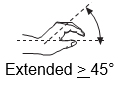 ✔ Yes - Extended |
✖ No - Pinch Grip or Finger Press ≥ 2 lbs or Power Grip ≥ 10 lb | ✖ No - ≥ 10 sec | ✖ No - ≥ 30/min |
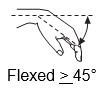 ✔ Yes - Flexed |
||||
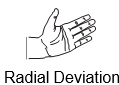 ✔ Yes - Radial Deviation |
||||
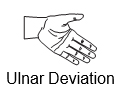 ✔ Yes - Ulnar Deviation |
||||
| Right Wrist |
✔ Yes - Extended |
✖ No - Pinch Grip or Finger Press ≥ 2 lbs or Power Grip ≥ 10 lb | ✖ No - ≥ 10 sec | ✖ No - ≥ 30/min |
|
✔ Yes - Flexed |
||||
|
✔ Yes - Radial Deviation |
||||
|
✔ Yes - Ulnar Deviation |
||||
| Left Elbow |
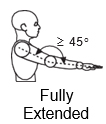 ✖ No - Extended |
✖ No - ≥ 10 lb | ✖ No - ≥ 10 sec | ✖ No - ≥ 2/min |
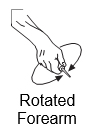 ✔ Yes - Rotated |
||||
| Right Elbow |
✖ No - Extended |
✖ No - ≥ 10 lb | ✖ No - ≥ 10 sec | ✖ No - ≥ 2/min |
|
✔ Yes - Rotated |
||||
| Left Shoulder |
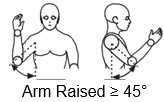 ✖ No - Arm Raised |
✖ No - ≥ 10 lb | ✖ No - ≥ 10 sec | ✖ No - ≥ 2/min |
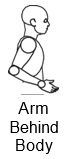 ✖ No - Arm Behind |
||||
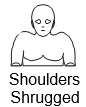 ✖ No - Shrugged |
||||
| Right Shoulder |
✔ Yes - Arm Raised |
✔ Yes - ≥ 10 lb | ✖ No - ≥ 10 sec | ✖ No - ≥ 2/min |
|
✖ No - Arm Behind |
||||
|
✖ No - Shrugged |
||||
| Neck | ||||
| Postures | Force | Duration | Frequency | |
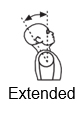 ✖ No - Extended |
✖ No - ≥ 2 lb | ✖ No - ≥ 10 sec | ✖ No - ≥ 2/min | |
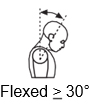 ✖ No - Flexed |
||||
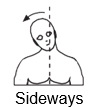 ✔ Yes - Sideways |
||||
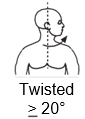 ✖ No - Twisted |
||||
| Back | ||||
| Postures | Force | Duration | Frequency | |
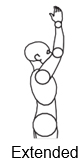 ✖ No - Extended |
✖ No - ≥ 25 lb | ✖ No - ≥ 10 sec | ✖ No - ≥ 2/min | |
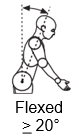 ✔ Yes - Flexed |
||||
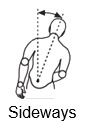 ✔ Yes - Sideways |
||||
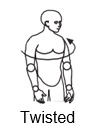 ✔ Yes - Twisted |
||||
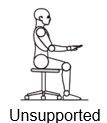 ✖ No - Unsupported |
||||
| Legs | ||||
| Postures | Force | Duration | Frequency | |
 ✖ No - Kneeling |
✖ No - ≥ 10 lb | ✖ No - ≥ 30% of the day | ✖ No - ≥ 2/min | |
 ✖ No - Squatting |
||||
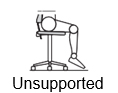 ✖ No - Unsupported |
||||
Ergonomic Stressors
| Stressors | |||
|---|---|---|---|
| Vibration | Low Temperature | Compression | Impact |
| ✖ No - Exposure to vibration | ✖ No - Exposure to cold temperatures | ✖ No - Compression from tool or surface | ✖ No - Exposure to sudden impacts |